24 Aug 2026
Night Shift Mechanics: How Continuous Platform Access Reshapes Bonus Allocation in Hybrid Slot and Lottery Systems Across Regulated Markets
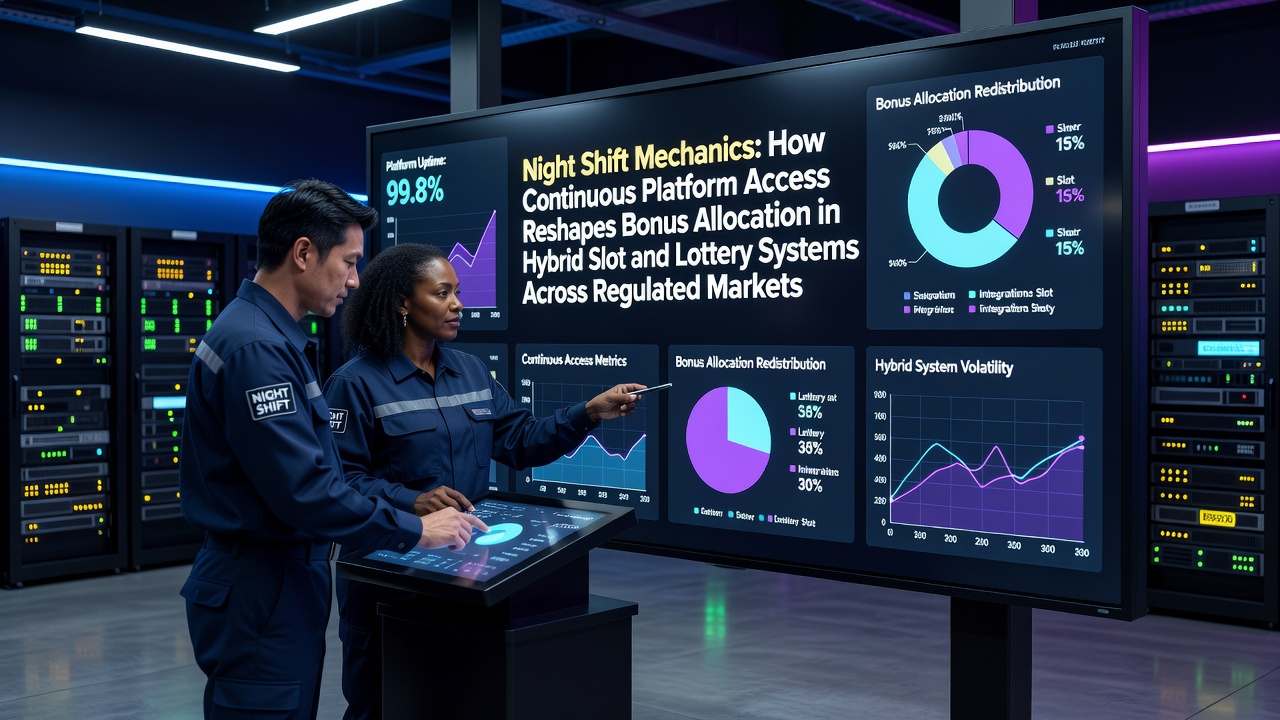
Continuous platform access has altered how operators manage bonus structures in hybrid slot and lottery environments, especially during overnight periods when player patterns shift toward extended sessions. Regulated markets track these changes through timestamped transaction logs that separate peak and off-peak activity, allowing systems to adjust prize pools and reward tiers based on real-time participation data rather than fixed daily cycles.
Mechanics of Night-Time Platform Operations
Platforms that remain open around the clock record higher volumes of micro-transactions after midnight, and these records feed directly into algorithms that recalculate bonus eligibility every few hours. Hybrid systems combine slot mechanics with lottery draws by linking progressive meters to both instant wins and scheduled jackpots, so night-shift activity influences the rate at which shared pools accumulate. Data from multiple jurisdictions shows that operators apply separate weighting factors for hours between 11 p.m. and 5 a.m. to prevent rapid depletion of promotional budgets while still encouraging steady engagement.
One regulatory report released by the Malta Gaming Authority in early 2026 documented that continuous-access titles saw a 19 percent increase in bonus redemptions during overnight windows compared with the previous calendar year. The same figures revealed that operators introduced staggered reset times for daily free-spin allocations to align with these patterns, spreading releases across four distinct time blocks instead of a single morning distribution.
Bonus Allocation Adjustments Across Jurisdictions
Regulators in several Canadian provinces require operators to publish the percentage of bonus funds reserved for off-peak hours, and these disclosures indicate that continuous platforms allocate roughly 28 percent of promotional value to sessions starting after 10 p.m. Australian state authorities follow a similar disclosure model through the New South Wales Liquor and Gaming authority, where monthly reports list average bonus values per active player segmented by time of day. Those reports show that night-shift mechanics often tie larger multipliers to lottery ticket purchases completed between 1 a.m. and 4 a.m., reflecting lower overall volume but higher per-player stake sizes during those intervals.

Hybrid models integrate slot outcomes with lottery number generation so that a single spin sequence can contribute toward both immediate credits and entries into later draws. When platforms operate without interruption, the backend systems must maintain synchronized clocks across distributed servers to ensure that bonus triggers remain consistent regardless of a player's geographic location or chosen device. Research conducted by the University of Nevada's International Gaming Institute found that synchronization protocols reduced discrepancies in bonus crediting by 94 percent once operators moved from batch processing to continuous validation.
Impact on Player Behavior and System Design
Transaction logs from operators licensed in New Jersey and Pennsylvania demonstrate that continuous access encourages longer session durations, with the median overnight session extending 14 minutes beyond daytime averages. Designers respond by embedding time-based triggers that unlock additional lottery entries after a player completes a set number of spins within a single night window, rather than spreading activity across multiple calendar days. This approach maintains compliance with daily loss-limit rules while still rewarding sustained engagement.
Industry data compiled by the European Gaming and Betting Association for the first half of 2026 shows that hybrid platforms adjusted bonus allocation algorithms at least twice during the spring months to account for seasonal changes in night-time traffic. Those adjustments included raising the threshold for progressive contributions during low-volume hours and lowering it during anticipated high-volume periods around major sports events that spill into late evenings.
Regulatory Oversight and Data Transparency
Authorities in regulated markets require operators to maintain immutable logs that separate bonus awards by both time and product type, and independent auditors review these logs quarterly. The logs capture every instance where a night-shift mechanic altered a player's eligibility for a hybrid prize, providing regulators with granular evidence of whether allocation rules remain fair across all hours. Platforms that fail to demonstrate consistent application of these rules face license conditions that mandate additional reporting or temporary restrictions on promotional activity.
Observers note that continuous access also affects how operators calculate responsible-gaming interventions, since overnight players may reach deposit or time limits at different rates than daytime users. Several jurisdictions now require pop-up reminders calibrated to local time zones rather than a single server clock, ensuring that messages reach players when their session began during night hours.
Conclusion
Continuous platform access has produced measurable shifts in how bonus resources flow through hybrid slot and lottery systems. Regulated markets document these shifts through timestamped data and periodic disclosures that separate night-time activity from standard operating hours. Operators adjust allocation rules accordingly, while regulators verify that the resulting structures remain transparent and compliant with existing statutes. The patterns observed through mid-2026 suggest that further refinements will continue as platforms refine their overnight mechanics in response to evolving usage data.